October 19, 2026
The model changed. Who approved the new risk?
Yesterday’s evaluation does not approve today’s behavior. Model, prompt and data changes need use-case tests, a named decision-maker and a workable way to stop or roll back.
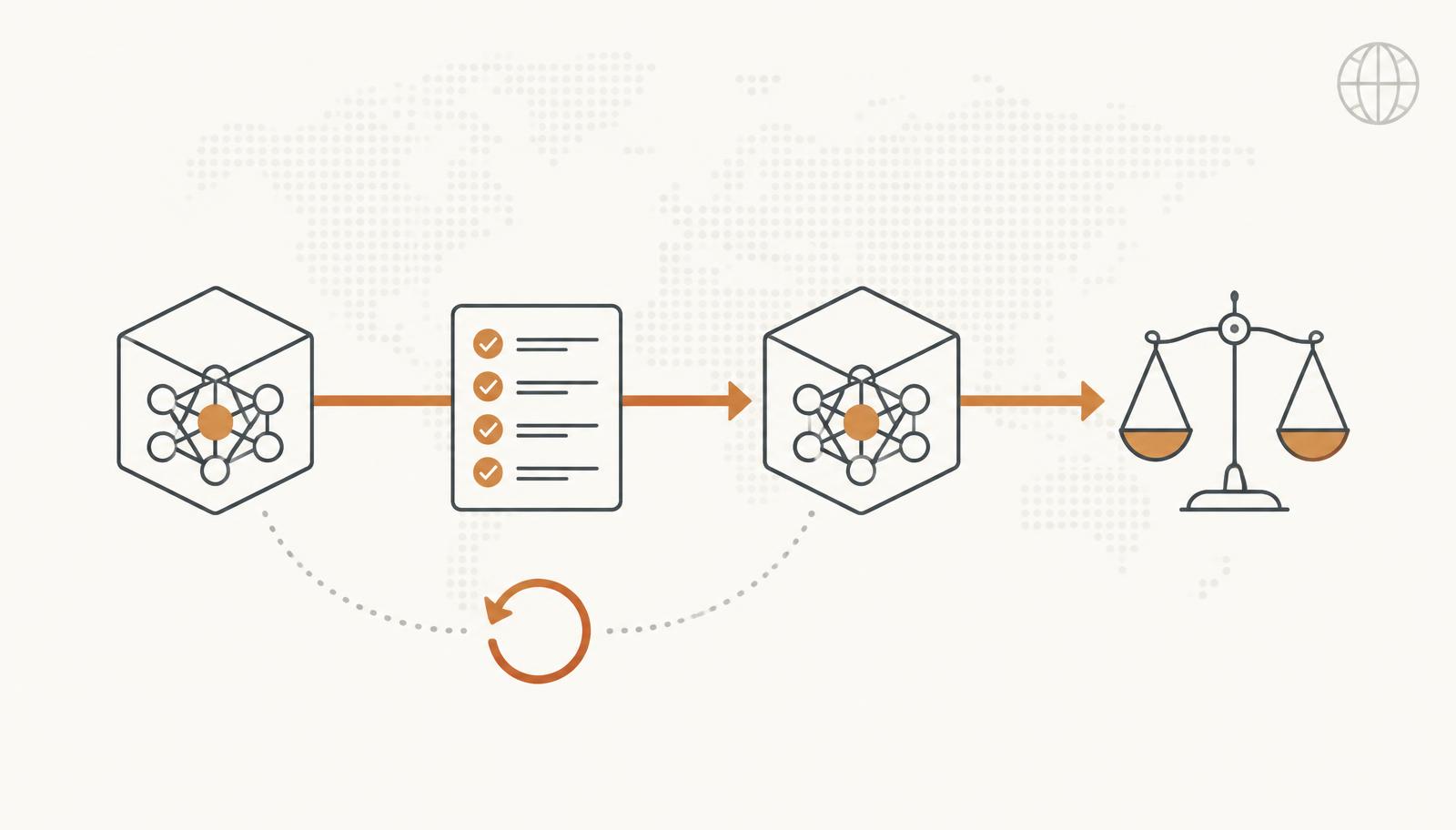
The visibility gap
An AI application can change without a new product launch. A provider updates a model; a team edits a prompt; a retrieval pipeline gains new documents. The application still has the same name, but its behavior and risk may no longer match the evidence used to approve it.
NIST’s voluntary AI Risk Management Framework organizes risk work around Govern, Map, Measure and Manage across the system lifecycle. That supports a practical distinction: approval is a decision based on evidence at a point in time, not a permanent guarantee. A vendor benchmark cannot establish fitness for your own workflow.
Risk example — illustrative, not a reported incident
A customer-support assistant passes tests before release. After a model or retrieval change, it starts giving incorrect refund advice on unusual cases. Aggregate satisfaction stays steady, so the regression reaches customers before complaints reveal it. The missed signal is a failure of change control and monitoring, not merely a bad answer.
CTO actions
• Name the person accountable for each production use case. Record the model/version where available, prompts, retrieval sources, tool permissions and relevant changes.
• Maintain representative tests: normal cases, difficult cases, sensitive-data handling and unacceptable actions. Set pass/fail criteria before comparing versions.
• Rerun evaluations for material changes. Record the evidence, the approval decision and residual risks; pin versions where supported and use staged rollout when feasible.
• Monitor real outcomes after release. Define escalation thresholds, a safe fallback and who can pause the system. If rollback is unavailable, disable the affected workflow rather than pretend a previous version can be restored.
The 10pm question
If the model’s behavior changed tonight, who would notice, who would decide, and who could stop it?
Governance brief based on NIST AI RMF 1.0, not a claim about a particular provider’s latest release. These are operational recommendations, not a legal determination or a guarantee of zero failures.
Source: NIST · AI Risk Management Framework 1.0 · January 2023